

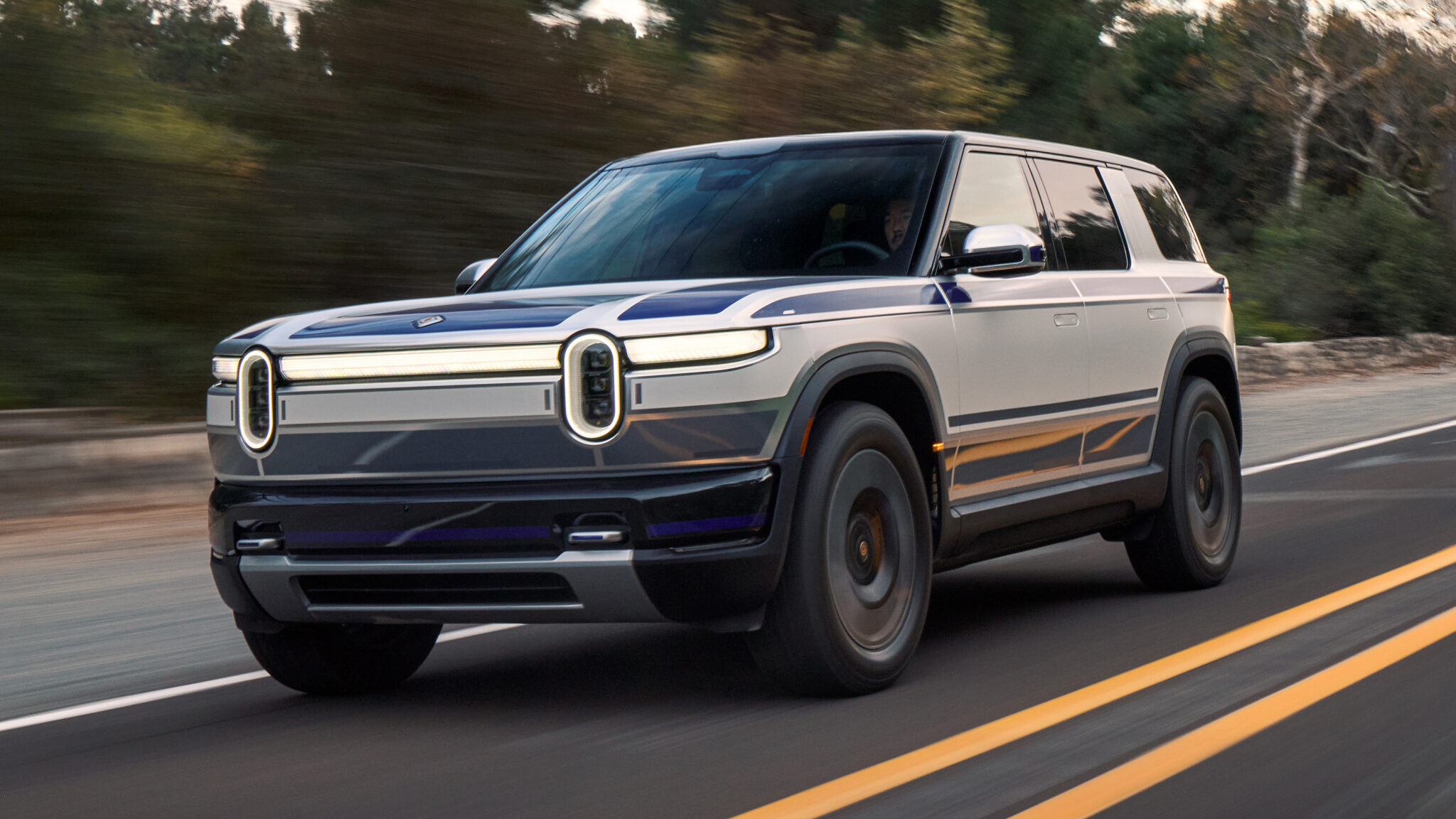
Why the Rivian R2 Is Getting So Much Attention
The Rivian R2 is easily one of the EV launches people are most excited about heading into 2026. And let’s be honest, it’s been a long time coming. Rivian made a strong first impression with the full-size Rivian R1S and Rivian R1T, but their premium pricing kept them firmly in the “aspirational” category for many buyers. The R2 is meant to change that. And now, it finally feels close to becoming real.
Final Validation Testing Means the Finish Line Is Near
Rivian has confirmed that the R2 has officially entered final validation testing. In plain terms, that’s one of the last major steps before a vehicle heads to production. This stage comes after years of development and brutal real-world testing. The kind of testing that pushes a vehicle far beyond what most owners will ever experience. It’s a big milestone, and a clear sign that Rivian is getting serious about bringing the R2 to showrooms.
Smaller Size, Same Adventure DNA
The R2 may be noticeably smaller than the R1S, but Rivian hasn’t backed away from its core identity. This is still an adventure-focused SUV, built to handle rough terrain and unpredictable conditions with confidence. The idea isn’t to make a watered-down Rivian. It’s to make a more approachable one that still feels capable, tough, and ready for the outdoors.
Years of Testing, No Shortcuts Taken
“We’ve spent years putting R2 through nonstop testing,” Rivian said. And judging by what the company has shared, that’s not an exaggeration. The R2 has gone through multiple lifetimes’ worth of mileage and endured extreme durability testing. Heat. Cold. Sand. Deep water. Max towing. If there was a way to stress the vehicle, Rivian tried it. The goal was simple. Find the weak points early, fix them, and repeat.
From Death Valley Heat to Alaskan Cold
Some of the R2’s test locations sound more like a travel documentary than an engineering checklist. Death Valley handled the heat side of things. Fairbanks, Alaska took care of the cold. The temperature range is extreme, from minus 45 degrees Fahrenheit all the way up to 122 degrees. That kind of spread ensures the cabin stays comfortable and the systems stay reliable, even in conditions harsher than what most drivers will ever face. Just as important, it helps confirm the battery and electronics are properly protected from the elements.
Engineers Are Confident, and That Matters
According to Max Koff, Rivian’s R2 Chief Engineer, the results have exceeded expectations. “Our R2 development fleet has performed incredibly well through all our testing,” he said. “Better than we ever expected.” That’s not something engineers usually say lightly. Improved performance and reliability across the board suggests Rivian has learned a lot from its earlier vehicles. And customers, if all goes as planned, will be the ones who benefit.
Quick, Capable, and Long-Legged
Performance is still very much part of the R2’s story. Like other Rivians, it’s expected to be quick. Really quick. Rivian says the R2 will sprint from zero to sixty miles per hour in about three seconds. That’s sports-car territory. Range looks strong too, with an estimated figure of more than 300 miles on a full charge. For an adventure-ready SUV, that combination checks a lot of boxes.
Following a Familiar Tesla Playbook
There’s a clear parallel here. Everything changed for Tesla when it launched the Tesla Model 3 in 2017. It was far more affordable than the Model S and Model X, and it went on to become the first EV to pass one million global sales. Later, the Tesla Model Y took over as Tesla’s top seller. Affordable, well-rounded EVs can be game changers.
Pricing That Could Broaden Rivian’s Reach
Rivian seems to be aiming for a similar breakthrough moment. After building its reputation in the premium segment, it now needs a product that reaches a wider audience. That’s where the R2 comes in. Rivian says it will start at around $45,000, roughly half the price of a mid-range R1S. And for buyers looking even lower, the upcoming R3 is expected to start under $40,000. That’s a meaningful shift.
A Tougher Market Than Before
Of course, the R2 isn’t launching into the same environment Tesla faced in 2017. There are now far more compact EV options on the market, and the broader EV space has cooled a bit as buyers lean toward hybrids for everyday practicality. Competition is tougher. Expectations are higher. There’s less room for missteps.
Why the R2 Could Still Be a Turning Point
Even with those challenges, the R2 feels pivotal for Rivian. If it delivers on price, performance, and durability, it could push the brand out of niche territory and into the mainstream EV conversation. That kind of shift doesn’t happen often. But when it does, it changes everything.