

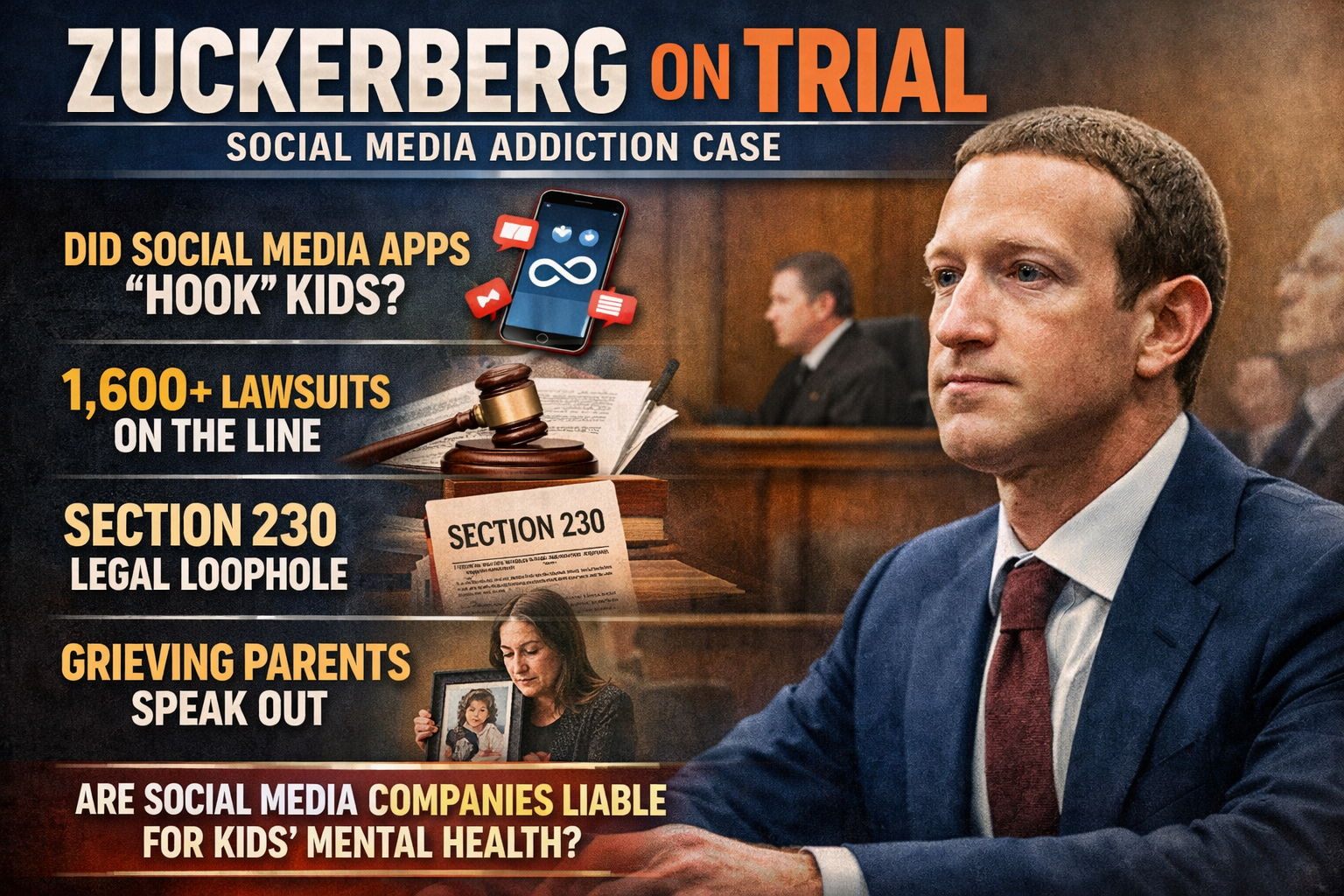
Here’s the thing. The spotlight is now firmly on Meta CEO Mark Zuckerberg as he prepares to face tough questions in a Los Angeles courtroom. And this isn’t just another tech lawsuit. It feels bigger — almost like a moment where the whole social media industry is being forced to look in the mirror. Lawyers representing families say platforms like Instagram weren’t just created to connect people. They argue these apps were built more like “digital casinos,” designed to keep kids scrolling… and scrolling… and scrolling. Zuckerberg’s testimony is expected to be one of the biggest moments of the trial. No livestream, no public feed. Just a jury listening closely behind closed doors.
The Big Question Behind the Case
Are social media apps defective products?
That’s what the jury has to decide. Not whether social media exists — but whether it was engineered in a way that knowingly exploits young users’ brains. The lawyers for the families say features like infinite scroll, auto play videos, push notifications, beauty filters, and likes weren’t accidental. They argue these tools were intentionally designed to make apps hard to put down. One attorney even described the platforms as machines built to “addict” kids. On the other side, tech company lawyers push back hard. Their argument? Just because a child struggles with mental health while using social media doesn’t mean social media caused it. Emotional struggles are complicated. Families, environment, genetics — there are many factors.
Honestly, it’s a debate that goes way beyond one courtroom.
The Young Woman at the Heart of It
The case centers around a 20-year-old woman from California, referred to only as KGM in court documents. She says she started watching YouTube when she was just six. Later, around nine years old, Instagram became a daily habit. According to her testimony, heavy use of these platforms worsened her depression and suicidal thoughts. The jury is expected to hear directly from her later in the trial. And let’s be honest — personal stories like this tend to hit harder than technical arguments or legal jargon.
Why This Trial Matters So Much
This isn’t just about one family. Not even close. Legal experts see this as a “test case,” something that could influence about 1,600 other lawsuits already filed by families and school districts. If the jury sides with KGM, it could open the door to massive financial damages and even force companies to redesign parts of their platforms.
That’s huge.
It’s almost like a domino effect — one verdict could tilt the whole industry.
The Section 230 Twist
For years, Silicon Valley has had a strong legal shield: Section 230 of the Communications Decency Act. Basically, it protects tech companies from being held responsible for what users post. But here’s the clever legal move from the plaintiffs. Instead of focusing on user content, they’re treating social media apps like products. Think less “publisher” and more “manufacturer.” Like suing a company for making a defective car or unsafe toy. That shift is what makes this trial feel different from past cases. Who’s Still In the Fight Originally, the lawsuit targeted several big names — Meta, Google, TikTok and Snap. But TikTok and Snap settled before trial. So now the courtroom battle is mainly between the families and two tech giants: Meta and Google. Meanwhile, Meta is dealing with another legal challenge in New Mexico, where the state attorney general accuses the company of failing to stop child exploitation on its platforms. Different case, but the pressure on the company keeps growing.
Families Watching From the Back Row
One of the most emotional parts of the trial has been the presence of parents who lost children after harmful experiences linked to social media. Some sit in court holding framed photos. Quietly. Just watching.Julianna Arnold, whose daughter died at 17 after meeting a predator online, said she hopes the trial pushes companies to add stronger safeguards. Her message is simple: parents deserve to know the risks, and platforms shouldn’t operate without boundaries.And honestly… that’s the emotional core of this whole story. Not algorithms. Not legal strategy. Real people.
What Happens Next?
The jury doesn’t need to be unanimous — nine out of twelve jurors must agree on a verdict. If the family wins, it could trigger settlement talks for hundreds of similar cases waiting in the wings.Either way, this trial feels like a turning point. Social media has shaped an entire generation, and now the question is whether the law sees those platforms as tools… or something more complicated.Here’s something to think about — this isn’t just about one company or one case. It’s really about how society decides to balance innovation, profit, and responsibility when young users are involved. And that conversation? It’s only getting started.