

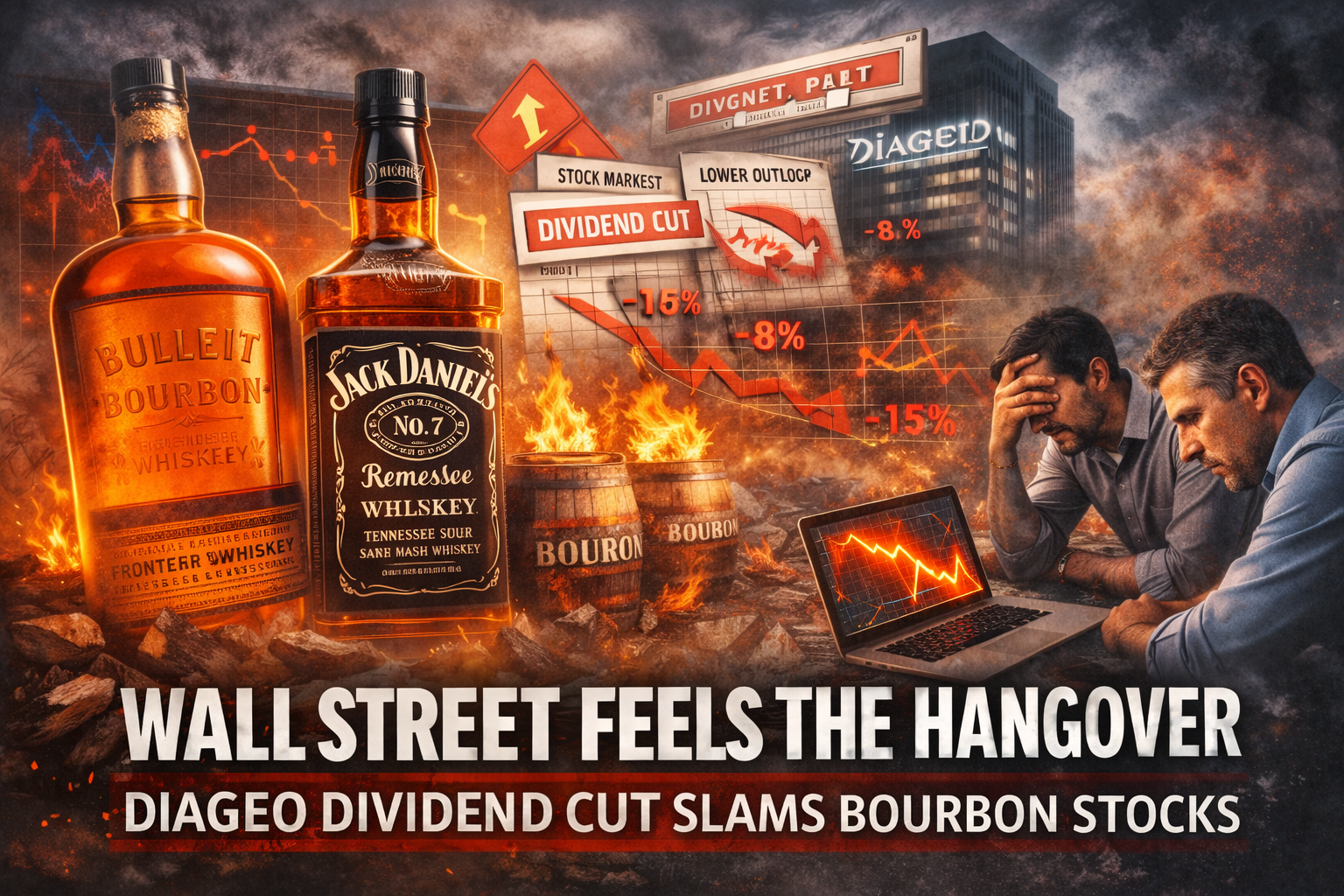
Wall Street had a tough morning — especially if you’re in the bourbon business.
Shares of several Kentucky-based spirits companies slid after Diageo cut its dividend in half and hinted that some product prices may come down. Investors didn’t wait around. The stock dropped more than 15% by mid-morning Wednesday.
That’s a sharp fall.
Diageo, which owns brands like Bulleit bourbon, Johnnie Walker, Guinness, Smirnoff, Don Julio and many more, reported that first-half sales slipped 2.8%. The U.S. market, in particular, has been soft. Now the company expects full-year sales to fall 2% to 3%. Not exactly the growth story investors were hoping for.
The Pain Spreads Across Kentucky
When a giant like Diageo sneezes, the rest of the industry tends to catch a cold.
Shares of Louisville-based Brown-Forman — the company behind Jack Daniel’s, Woodford Reserve and Old Forester — fell more than 8%. Brown-Forman will share its quarterly results soon, but the mood in the sector already feels cautious.
Diageo’s new CEO, Dave Lewis, put it simply: the North American market is “challenged.” That’s corporate speak for “it’s tough out there.”
Tequila Slows, Bourbon Under Pressure
Tequila sales in the U.S. were especially weak, down nearly 7%. Even growth in ready-to-drink cocktails couldn’t offset losses from big names like Don Julio and Casamigos. And bourbon hasn’t been immune either. Last year, Bulleit sales dropped more than 7%. Diageo even closed its bottling facility at the Stitzel-Weller Distillery near Louisville and paused distilling at its Lebanon plant for several months.
On top of that, the company is rolling out $625 million in global cost cuts.
That’s not trimming around the edges. That’s serious restructuring.
Americans Are Drinking Differently
Here’s something interesting.Lewis said people aren’t necessarily drinking less often — but they are drinking less per occasion. In other words, they might still go out, but maybe they’ll have one cocktail instead of two. It’s subtle. But it adds up.
Let’s be honest, prices everywhere feel higher. Groceries, rent, gas. So it makes sense that people are tightening up a bit, even on small indulgences.Lewis also downplayed trends like GLP-1 weight-loss drugs having a major impact on alcohol consumption — at least for now. The bigger issue, he said, is economic pressure.Consumers are squeezed. And when wallets feel tight, premium spirits can feel like an easy place to cut back.
Premium Brands vs. Budget Reality
Another challenge? Diageo’s portfolio leans heavily toward premium products. That’s great when consumers are splurging. Not so great when they’re looking to save a few dollars.Many shoppers are trading down. Smaller bottle sizes. Lower price points. Maybe switching brands entirely.
Lewis admitted Diageo doesn’t have a strong presence in the mass-market category. And that could be part of the problem. So now the company is exploring “price repositioning.” Translation? Some products might get cheaper. It’s a strategy they tested in the UAE — lowering prices on certain brands to boost volume, while still offering high-end options at the top tier.
It’s a bit of a balancing act. Like a see-saw. Lower prices on one end, premium prestige on the other.
It’s Not Just Diageo
This slowdown isn’t happening in isolation.
Suntory, the parent company of Jim Beam and Maker’s Mark, recently reported a 2.4% drop in alcohol sales for the first half of the year. In December, it announced it would pause production at the main Jim Beam plant in Clermont for a year.American whiskey sales overall fell about 1% last year — roughly a $100 million dip, according to industry data.Not catastrophic. But noticeable.
MGP Feels the Inventory Crunch
Then there’s MGP Ingredients, which produces whiskey for other brands through contract distilling. The company reported a 52% drop in its “brown goods” sales for the year.
That’s huge.
Many of its big customers paused purchases to balance inventory and conserve cash. In plain terms? Warehouses are full, and companies don’t want to overproduceMGP also recorded a large accounting adjustment — more than $150 million — which led to a net loss for the year. Even though some of its premium brands grew, overall branded spirits sales still fell 3%.
CEO Julie Francis summed it up: elevated inventory levels are going to keep pressuring the business in the near term.
So What’s Really Going On?
Here’s the bigger picture.
People aren’t quitting alcohol overnight. Bars aren’t empty. But spending habits are shifting. Consumers are cautious. Companies built around premium pricing are feeling that shift first. The industry had years of strong growth. Maybe this is a reset. Maybe it’s temporary. Hard to say. But one thing’s clear — the spirits market isn’t as smooth as a well-aged bourbon right now. It’s a little rough around the edges.
And investors? They’re definitely feeling the burn.